June 25, 2026
Doula vs Midwife: What's the Difference?
Confused about the doula vs midwife difference? Learn what each role does, how they compare to your OB, and whether you need one or both for your birth.

The doula vs midwife difference is one of the first questions I hear from expectant moms. The roles get tangled together in conversation, in pregnancy books, and especially in online forums. I've supported hundreds of births as a certified doula, and the distinction is straightforward once you break it down. A midwife is your medical provider who delivers your baby. A doula is your support professional who provides continuous support throughout your labor. They do different jobs, and most families benefit from having both.
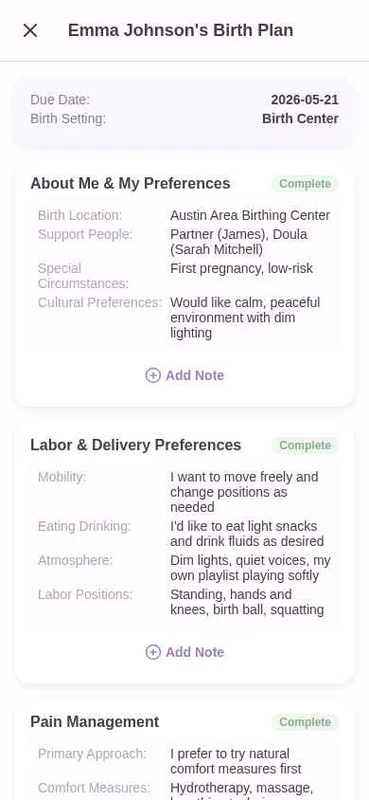
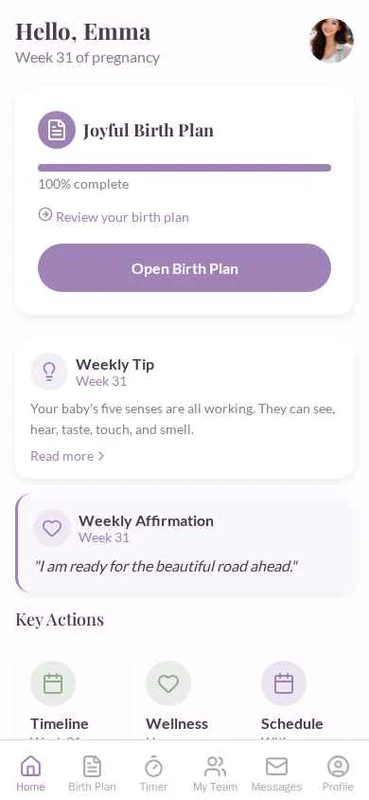
If you're just starting to build your birth team, grab my free Joyful Birth Plan template first. It gives you a structured way to document your preferences for pain management, delivery setting, and support people, which makes these conversations with providers much easier. For the full reference guide on this topic, visit our doula vs midwife pillar page which includes a detailed comparison table and clinical references.
What Exactly Does a Doula Do?
A doula provides continuous emotional, physical, and informational support before, during, and after labor. The word comes from Greek, meaning "a woman who serves." Doulas do not provide medical care. We don't deliver babies, check your cervix, monitor fetal heart tones, or prescribe medications. Instead, a doula focuses entirely on you, your comfort, your confidence, and your ability to make informed decisions in real time.
During labor, a doula might suggest position changes to help labor progress, use counter-pressure or massage to help you cope with contractions, remind you of your birth plan preferences when you're deep in labor, explain what's happening in plain language when things move fast, and support your partner so they know how to help. A doula provides continuous labor support, even when your nurse changes shifts.
I remember working with a first-time mom in Austin, TX who told me halfway through her labor that she couldn't do it anymore. That's a moment every doula recognizes. I didn't tell her she was wrong or try to pump her up with false confidence. I looked her in the eye and said, "You're already doing it." She later told me that single sentence carried her through the next two hours. That's the doula difference. It's not medical, but it changes outcomes.
A mom I connected with through an online birth community put it this way: she was halfway through her pregnancy and really wanted to switch to a midwife for a natural birth, but she had just discovered doulas existed and wasn't sure which one she needed. She ended up booking a consultation with a local doula who walked her through the difference in twenty minutes and helped her realize she wanted both. That conversation changed her entire birth experience.
What Exactly Does a Midwife Do?
A midwife is a licensed medical provider who specializes in pregnancy, labor, birth, and the postpartum period. Midwives provide comprehensive maternity care, including clinical assessments, prescribing medications, ordering tests, and delivering babies. In the United States, there are two main types: Certified Nurse-Midwives (CNMs) who are registered nurses with graduate-level midwifery education and can practice in all 50 states, and Certified Professional Midwives (CPMs) who are trained specifically for out-of-hospital birth settings.
What midwives do that doulas don't: perform clinical exams like cervical checks and fetal monitoring, diagnose conditions like preeclampsia or gestational diabetes, prescribe medications including pain relief and antibiotics, order lab work and ultrasounds, catch the baby and manage the delivery, stitch tears, and provide well-woman care.
One mom I spoke with had midwives for her first two births and described the experience as far more personal than OB care. Her midwife for her first birth spent time with her, answered questions thoroughly, and made her feel like a person rather than a patient. For her third pregnancy, she needed OB care because she was carrying twins, but she still credits her midwife experiences with shaping how she advocates for herself in medical settings.
If you're looking for midwife-friendly birth settings, check out birth support resources in Aurora, CO or Portland, OR, where midwifery care is well-integrated into both birth centers and hospital systems. You can also browse our Colorado birth support hub for hospital policies and provider information across the state.
How Is a Doula Different From a Midwife?
The simplest way to understand the doula vs midwife difference: a midwife is your medical provider, and a doula is your support partner. One delivers your baby. The other makes sure you feel strong enough to push. Here is a side-by-side breakdown:
- Medical provider? Midwife: Yes, licensed clinician. Doula: No.
- Delivers babies? Midwife: Yes. Doula: No.
- Prescribes medication? Midwife: Yes (CNMs in all states). Doula: No.
- Clinical exams? Midwife: Yes, cervical checks, monitoring, blood pressure. Doula: No.
- Primary focus? Midwife: Clinical safety and medical management. Doula: Emotional and physical comfort.
- Continuously present? Midwife: Typically present for active labor and delivery. Doula: Yes, entire labor from start to finish.
- Typical cost? Doula: $800 to $2,500. Midwife: Usually covered by insurance in hospital settings, $3,000 to $9,000 out-of-hospital.
The key insight is that these roles don't overlap, they complement each other. A midwife manages the clinical picture. A doula fills in the gaps that medical staff can't always provide. When I work alongside a midwife, we function as a team. She handles the medical decisions, I handle the mom.
A birth doula midwife comparison often comes down to one question: do you want someone managing your medical care, or someone managing your experience? The answer for most moms is both. For a deeper look at what doulas specifically offer, read our what is a doula guide and our benefits of a doula overview which covers the Cochrane review data on continuous labor support.
Should I Hire a Doula or Midwife?
This is the question I get most often, and the answer depends on your care setting, your priorities, and your budget. Let me walk you through the most common scenarios.
If you're planning a hospital birth with an OB: You already have a medical provider. What you may not have is continuous support. Hospital nurses rotate shifts and manage multiple patients. A doula fills that gap, providing continuous support throughout your labor and making sure your birth plan is followed. In this scenario, a doula is usually more immediately useful than switching to a midwife.
If you're planning a birth center or home birth: You likely have a midwife as your primary provider. But midwives have clinical responsibilities that pull their attention. A doula adds the dedicated, non-clinical support layer that makes the experience feel supported rather than just managed.
One mom in a birth community forum shared that she had a home birth with a midwife and also hired a doula for her second birth. Her midwife was warm and maternal, but the doula provided the sustained presence and position suggestions that kept labor progressing. For her third birth, she used a midwife alone. That's a valid choice too. Some moms want a large support team, others prefer fewer people in the room.
If you're high-risk: You'll likely be under an OB's care, which means doulas are your primary option for additional support. Some midwives co-manage high-risk pregnancies with physicians, but if your pregnancy requires specialist care, a doula is usually the right addition.
If cost is a factor: Midwifery care is usually covered by insurance. Doula services are often out-of-pocket, though some Medicaid programs and private insurers now cover doula care. Check our Medicaid doula coverage guide to see if your state covers doula services. If budget forces a choice, prioritize the clinical provider your situation requires, then explore sliding-scale or community doula programs.
For specific cost ranges in your area, see doula costs in Austin, TX or Chicago, IL. You can also check our Texas birth support hub for statewide Medicaid coverage and cost data.
Doula vs Midwife vs OB: How Do They Compare?
The doula vs midwife vs obgyn question comes up when moms realize there are three birth support roles, not two. Your OB is a surgical specialist who manages high-risk pregnancies and handles complications. Your midwife is your primary maternity clinician for prenatal care and normal labor. Your doula is your continuous support with no clinical duties and no shift changes.
One mom I connected with had a midwife group for her first birth, and the main person who helped her through everything at the hospital was actually her nurse. Her husband had taken an online class about labor positions and helped her through it. For her second birth, she switched to an OB because they moved, but she used the techniques she remembered. Her takeaway: what she had actually been looking for was a doula, someone whose entire job is to stay present and support her through the process.
Some OBs are unfamiliar with doulas and may be hesitant at first. If your provider expresses concern, explain that a doula does not make medical decisions, challenge clinical advice, or create conflict. A good doula supports the relationship between you and your provider. Research backs this up: a 2019 study in the journal Birth found that doula-supported births actually had better communication between patients and providers, not worse.
If you're trying to decide whether to hire a doula, our how to choose a doula guide walks you through interview questions and what to look for. For moms in Seattle, WA or Atlanta, GA, those city pages list local doulas with cost ranges and service details.
Can You Have Both a Doula and a Midwife?
Yes, and most families should. Having both a doula and a midwife gives you the most complete support possible for your birth.
Here's how they work together. Imagine you're in active labor at a birth center. Your midwife monitors the baby's heart rate, checks your progress, and makes clinical decisions. Between checks, she may step out to chart or prepare for delivery. Your doula is the one focused on you. She's holding your hand through contractions, reminding you to breathe, helping you sway on the birth ball. When it's time to push, your midwife catches the baby. Your doula coaches you through each push and keeps you hydrated.
This is the doula vs midwife distinction in action: they're not doing the same job. Midwives themselves frequently recommend doulas. A 2016 study in the Journal of Perinatal Education found that midwife-attended births with doula support had the lowest intervention rates and highest satisfaction scores of any care model studied.
A certified nurse-midwife I work with in Boston, MA tells her clients the same thing I do: "I'll keep you and your baby safe. A doula will keep you sane. You deserve both." That captures the partnership perfectly. If you're in Phoenix, AZ or another city with active birth center communities, ask your midwife for doula recommendations. Most midwives have a short list of doulas they trust and refer regularly.
How Do You Decide Which Birth Support Is Right for You?
The decision comes down to four factors: your care setting, your risk level, your budget, and your personal preference for how many people you want in the room.
Ask yourself:
- Where do you plan to give birth? Hospital, birth center, or home?
- Who is your current prenatal care provider? OB, CNM, or CPM?
- Is your pregnancy low-risk or high-risk?
- What is your budget for out-of-pocket birth support?
If you're low-risk and planning a hospital birth with an OB, a doula is usually your highest-impact addition. If you're planning a birth center or home birth, you likely already have a midwife, and a doula adds the continuous comfort layer. If you're high-risk, focus on finding a doula who has experience with your specific clinical situation.
Cost varies by location. In major metro areas, doula services typically range from $1,000 to $2,500. In smaller cities, you may find doulas in the $800 to $1,500 range. Check our doula cost guide for detailed pricing data by region. Our insurance coverage for doulas article breaks down what's covered and how to file.
Frequently Asked Questions About Doula vs Midwife
Can a doula deliver a baby?
No. A doula is not a medical provider and cannot deliver babies, perform clinical exams, or prescribe medications. Only licensed medical providers like midwives, obstetricians, and family physicians deliver babies. The American College of Obstetricians and Gynecologists (ACOG) recognizes doulas as non-medical support personnel.
Is a midwife safer than an OB for low-risk births?
For low-risk pregnancies, midwife-led care produces outcomes comparable to or better than OB-led care, with fewer unnecessary interventions. A 2016 Cochrane review found higher rates of spontaneous vaginal birth, lower rates of episiotomy, and no difference in infant mortality compared to physician-led care. High-risk pregnancies require OB or specialist care.
Does insurance cover both a doula and a midwife?
Midwifery care (CNM) is widely covered by private insurance and Medicaid. Doula coverage is expanding but still limited. As of 2026, 15 states plus Washington D.C. have Medicaid programs that cover doula services. Some private insurers also offer partial reimbursement.
How much does a doula cost compared to a midwife?
A birth doula typically costs $800 to $2,500 out-of-pocket. A CNM in a hospital setting is usually covered by insurance with standard copays. Out-of-hospital midwifery care costs $3,000 to $9,000, sometimes partially covered. See our postpartum doula guide for postpartum-specific pricing.
Can I hire a doula if I'm having a planned C-section?
Yes. Doulas support planned cesarean births by helping you prepare, staying with you before and after the procedure, supporting your partner, and assisting with immediate postpartum recovery and breastfeeding.
What's the difference between a birth doula and a postpartum doula?
A birth doula supports you during pregnancy and labor. A postpartum doula supports you after the baby arrives, helping with newborn care, feeding, light household tasks, and emotional recovery. Many families hire both.
Your Next Step: Write Your Birth Plan
Whether you choose a doula, a midwife, or both, the single most important thing you can do before labor begins is write your birth plan. A birth plan tells your team, doula, midwife, OB, and nurses, exactly what matters to you. Without it, even the best support team is guessing.
Start with the free Joyful Birth Plan template. It walks you through every decision point, from pain management to delivery preferences to newborn procedures. Then schedule a Birth Plan Confidence Session to review your completed plan with a certified doula line by line.
If you're still deciding between providers, our frequently asked questions page covers common concerns about birth support, costs, and what to expect from each role. And if you want to explore local options, browse birth support in Beaumont, TX or your nearest city to see what doulas and midwives are available in your area.
Written by Shelbi Kohler