June 30, 2026
How to Build a Home Birth Plan That Works
Writing a home birth plan? Here's what to include, what to ask your midwife, and how to prepare your space for a safe, supported labor at home.

A home birth plan is not the same as a hospital birth plan. At home, you are not adapting to hospital protocols. You are designing your environment from the ground up. After seven births of my own and hundreds more as a certified doula, I can tell you that the families who prepare their home birth plan thoughtfully are the ones who feel settled when labor starts, not frantic.
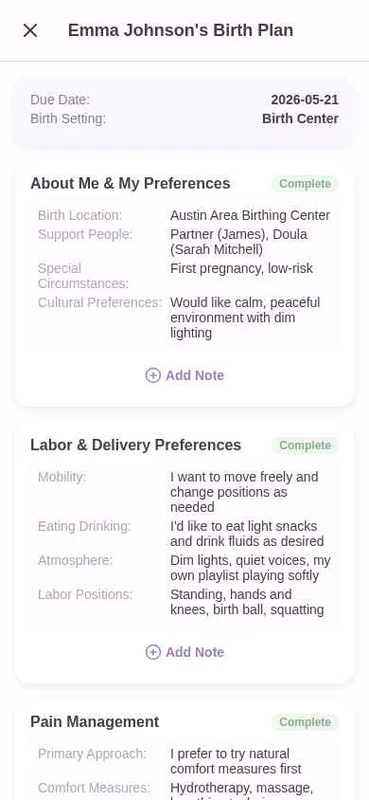
If you want a structured starting point, grab the True Joy Birthing birth plan template. It includes a home birth section you can fill out and hand to your midwife at your next prenatal visit.
What Should a Home Birth Plan Actually Include?
Your home birth plan covers three things: your medical preferences, your environment, and your logistics. Most families focus only on the first one and forget the other two. That is a mistake.
Your medical preferences include who your midwife is, whether you have a backup OB, your preferences for monitoring during labor, and your plans for the third stage of labor. It also includes what you want to do if transport becomes necessary.
Your environment covers where in your home you plan to labor, what supplies you need, who is present, and how the space is set up. Your logistics cover the practical layer: where the closest hospital is, who is watching your other kids, where your birth kit is stored, and how your midwife will get to you.
I worked with a family in Denver who had their home birth plan written by 32 weeks, but they had not thought about where their toddler would go when labor started. Active labor hit at 2 a.m. and their friend who agreed to be on call did not answer. The dad spent the first hour of labor calling around. That is the kind of gap a plan closes.
How Do You Choose and Prepare Your Birth Space?
One of the biggest advantages of a home birth is that you control the space. But that means you have to plan it.
Think about these questions:
- Which room do you want to labor in? Living rooms work well because they offer more floor space and access to a kitchen.
- Do you want a birth pool? A filled pool holds roughly 150 to 200 gallons of water, weighing over 1,200 pounds. Make sure your floor can support it.
- Where will your midwife set up? She needs a clean surface, good lighting, and access to a bathroom.
- Do you want music, dim lighting, or specific items like candles or photos nearby?
- Where will your older children be if they are home?
A mom I supported in Portland planned her birth in the living room with a pool near the big windows. She had a playlist, string lights clipped to the curtain rod, and clean towels in a labeled bin. When labor started, everything was ready. She told me afterward that walking into that space, already set up, made her feel like her body could relax and do the work.
That is what a prepared environment does. It removes decision-making from a moment when you should not be making decisions.
Your midwife will bring the clinical supplies. But you are responsible for your personal birth kit. Here is what I tell every client to gather:
- 10 to 12 clean towels (old ones, not your good ones)
- A waterproof mattress protector or shower curtain under your sheets
- Plastic sheeting or a drop cloth for the floor around your birth space
- A birth pool liner and hose if you are planning a water birth (your midwife may provide these, but check)
- Snacks and drinks with electrolytes, such as coconut water or labor-aid mixtures
- Postpartum supplies: adult diapers, perineal spray, sitz bath herbs, and pads
- A planned outfit for your baby, including a hat and swaddle
- Phone chargers and a list of people to notify after the birth
Have everything gathered in one labeled bin by 36 weeks. Do not wait.
Who Should Be Present at Your Home Birth?
This is one of the most important sections of your home birth plan. At a hospital, the room is controlled by staff. At home, you control who walks through the door.
- Your midwife and any assistants or student midwives she brings
- Your partner or primary support person
- A doula, if you have one (and I recommend you consider it)
- Your older children, if you want them present and have childcare backup if they get bored or scared
- A friend or family member whose only job is to handle food, photos, and siblings
One family I worked with in Austin had their four-year-old present for the birth. They hired a doula who also served as the child's support person, explaining what was happening and stepping outside with her when she needed a break. The mom told me later that having her daughter there, supported by someone whose only job was that child, made the whole experience feel like a family event instead of a medical one.
If you do want older siblings present, prepare them in advance with books or conversations, designate a dedicated support person, and have a backup plan if they want to leave. A mom I supported in Nashville had her seven-year-old present for early labor. When things intensified, his grandmother took him to the park for two hours. He came back in time to meet his sister. That happened because it was written in the plan.
If you are looking for local doula support, we have directories for birth support in Aurora and Seattle, plus state-level resources for birth support across Texas.
What Is Your Transport Plan and Why Does It Matter?
This is the section most families do not want to write. I understand. You are planning a home birth because you want to be at home. But transport happens. Roughly 10 to 15 percent of planned home births for first-time moms result in a transfer to a hospital, and the rate is lower for people who have given birth before. Most transfers are not emergencies. They are for pain management, prolonged labor, or concerns about the baby's heart rate.
Your transport plan should include:
- The name and address of the nearest hospital with a labor and delivery unit
- The drive time from your home to that hospital at different times of day
- Who drives (your partner, a friend, or an ambulance if your midwife calls one)
- A bag packed by the door with clothes, ID, insurance card, and phone charger
- Your midwife's protocol: does she ride with you, meet you there, or stay until EMS arrives?
I supported a family in Chicago whose labor stalled after 18 hours at home. Their midwife recommended transport. Because they had a plan, the dad grabbed the pre-packed bag, called backup childcare, and they were at the hospital in 12 minutes. The mom told me the hardest part was accepting the transfer, not navigating it. The logistics were handled because they had written it down.
If you want to compare birth settings, read our guide to choosing your birth setting. And if you are deciding between doula and midwife roles, our comparison of doula vs midwife breaks down who does what.
What Should You Discuss With Your Midwife Before Labor?
Your midwife is your primary care provider at a home birth. Your plan should be a shared document, not something you hand her during labor.
Bring it to a prenatal visit around 34 to 36 weeks and review it together. Here are the questions I recommend asking:
- Which interventions are you comfortable providing at home, and which require transport?
- What is your protocol for postpartum hemorrhage?
- How do you monitor the baby during labor?
- What equipment do you bring, and what do I need to provide?
- When do you want me to call you in labor?
- How long after the birth do you stay?
- What is your postpartum visit schedule?
Your midwife may adjust your plan based on her protocols. That is a conversation, not a rejection. You want to know where your preferences align before labor starts.
If you are still deciding what to include, read our guide to what to include in a birth plan. And if you are working through different scenarios, our birth plan scenarios guide walks you through the unexpected.
What About Postpartum Planning at Home?
Home birth postpartum is different from hospital postpartum. There is no nursing staff checking on you every few hours. Your midwife will visit, usually at 24 to 48 hours, again around day 3 or 4, and at one to two weeks. Between those visits, you are on your own with your support people.
Your postpartum section should include:
- Who is staying with you for the first 72 hours
- A meal plan: prepped food, a meal train, or delivery gift cards
- Your pain management plan, including any remedies your midwife recommends
- Breastfeeding support: who to call if you need help in the first week
- Rest schedule: who handles nighttime care so you can sleep in chunks
- When your partner returns to work and what coverage you have after that
A family I worked with in Nashville had their postpartum plan written as carefully as their birth plan. The mom had her sister staying for a week, her mother coming on day 8, and a postpartum doula booked for three visits in the first two weeks. She told me that having people scheduled in layers meant she never hit a wall where she was alone with a newborn while still recovering.
If you want to learn more about postpartum support, read our guide to what a postpartum doula does. For local support, check our directories for Charlotte and Boston, or browse birth support across North Carolina.
Frequently Asked Questions About Home Birth Plans
Is a home birth plan different from a hospital birth plan?
Yes. A home birth plan covers your environment, supplies, transport logistics, and sibling preparation in addition to medical preferences. A hospital plan adapts to existing protocols. A home plan builds the framework from scratch. You can read our full companion guide to home birth planning for a deeper overview.
What percentage of home births transfer to a hospital?
According to a 2014 study published in the Journal of Midwifery and Women's Health analyzing data from over 47,000 planned home births, the transfer rate was approximately 10.9 percent for first-time mothers and 2.5 percent for women who had previously given birth. The majority of transfers were non-emergency, for reasons like prolonged labor or pain management.
Can I have a water birth at home?
Yes. Many home births include water labor or water birth. You will need a birth pool, a food-grade hose, a pool liner, and a water source that can fill the pool to at least 18 inches deep. Your midwife will monitor the water temperature, which should stay between 95 and 100 degrees Fahrenheit during active labor. Discuss this with your midwife at a prenatal visit.
Do I need a doula if I have a midwife for a home birth?
A midwife is your medical provider. A doula provides physical, emotional, and informational support. They serve different roles. A midwife focuses on clinical safety. A doula focuses on comfort, advocacy, and helping your partner participate. Many home birth families hire both. Our doula vs midwife comparison breaks down the roles in detail.
What supplies does my midwife bring versus what I provide?
Your midwife brings clinical supplies: oxygen, resuscitation equipment, medications for postpartum hemorrhage (such as Pitocin or misoprostol), suturing materials, a doppler for fetal heart rate monitoring, and sterile instruments. You provide personal items: towels, waterproof protectors, a birth pool if you want one, snacks, and postpartum care supplies. Your midwife will give you a specific list around 34 to 36 weeks.
How soon after a home birth does my midwife leave?
Your midwife typically stays for 2 to 4 hours after the birth. She monitors your bleeding, helps with the first breastfeed, checks the baby's vitals, and ensures your placenta is delivered completely. She will not leave until you and your baby are stable. She will return for follow-up visits within 48 hours, again around day 3 to 5, and at 1 to 2 weeks postpartum.
Plan Early, Plan Honestly
A home birth plan works when you write it early, share it with your midwife, and update it as you learn more. Start at 28 to 30 weeks, review it at 34, and finalize it by 36.
If you want a template that walks you through every section, use the True Joy Birthing birth plan template. It includes home birth preferences, transport planning, postpartum support, and feeding plans all in one document.
You are choosing to birth at home because you want ownership of the experience. A written plan is how you take it.
Written by Shelbi Kohler